Why Garages Should Start Winter Prep Now
Don’t wait for the temperature to drop. Start winter preparation now and help keep your customers warm, comfortable and ready…
Read more
Late summer can be a surprisingly busy period for the automotive aftermarket. After months of warmer weather, long journeys and increased air-conditioning use, many thermal management components begin to show the strain. Here are five product areas that are likely to remain in demand as summer draws to a close.
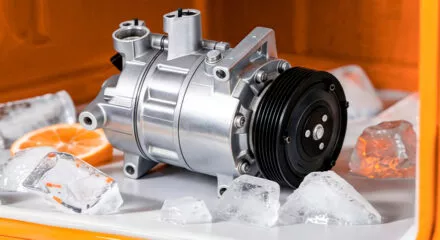
1. Air-conditioning compressors
The compressor is at the heart of the vehicle’s air-conditioning system. During the summer months, it works particularly hard to circulate refrigerant and maintain a comfortable cabin
temperature.
Extended use can expose existing weaknesses, resulting in reduced cooling performance, unusual noises or complete system failure. However, technicians should always diagnose the full system before replacing the compressor. Contamination, incorrect refrigerant levels, lubrication problems or faults elsewhere in the system can all contribute to compressor failure.
2. Air-conditioning condensers
Positioned at the front of the vehicle, the condenser is particularly vulnerable to corrosion, road debris and impact damage. Even a small leak can lead to a loss of refrigerant and a noticeable reduction in air-conditioning performance. Late summer is often when these problems become more apparent. When diagnosing an air-conditioning fault, technicians should carefully inspect the condenser and surrounding pipework for signs of damage or leakage.
3. Radiators
High temperatures, long-distance journeys and slow-moving traffic can place additional pressure on the engine cooling system. A damaged, blocked or leaking radiator may struggle to dissipate heat effectively, increasing the risk of overheating. Technicians should look for coolant staining, damaged fins, corrosion and restricted airflow. It is also important to inspect the condition of the coolant and check that the wider cooling system is operating correctly.
4. Cooling fans
Cooling fans are essential when natural airflow through the radiator is limited, particularly when a vehicle is stationary or travelling slowly. A faulty fan may not become obvious during normal driving, but problems can quickly emerge in traffic or during warmer weather. Technicians should check the fan assembly, electrical connections and related sensors as part of the diagnostic process.
5. Expansion tanks and caps
Expansion tanks may be less complex than some other thermal management components, but they perform an essential role. They accommodate changes in coolant volume as the engine heats and cools, while helping the system maintain the correct pressure. Repeated heat cycles can cause plastic tanks to become brittle, discoloured or cracked. The cap can also lose its ability to regulate pressure correctly, leading to coolant loss or cooling system problems. A visual inspection of the expansion tank, cap and surrounding hoses should form part of any cooling-system check.
PREPARATION PREVENTS COMEBACKS
NRF supplies an extensive range of engine cooling and air-conditioning components, supported by over 95 years of experience in thermal management. With high-quality products, extensive vehicle coverage and technical support, NRF helps workshops complete professional, reliable repairs throughout every season.
Prepare for changing seasonal demand with NRF aftermarket parts and industrial cooling solutions.
Download full PDF article here: Top 5 Most Requested Parts