Why Garages Should Start Winter Prep Now
Don’t wait for the temperature to drop. Start winter preparation now and help keep your customers warm, comfortable and ready…
Read moreWhen replacing a car part, reliability is often the biggest concern. Will the replacement last? Will it fit correctly? Will it perform the way the original did?
Many buyers assume that original parts are automatically more reliable than aftermarket alternatives. It is a common belief, but it oversimplifies a more nuanced reality. Some aftermarket parts perform extremely well and are trusted by workshops every day. Others may not meet the same standards. The same variation exists within the original parts channel, though it receives less scrutiny.
The real question is not simply “original or aftermarket.” It is about who made the part, how it was engineered, how thoroughly it was tested and how consistently it is produced. This article separates myth from reality and explains what actually determines whether a replacement part will be reliable. For a full comparison of the two channels, see Original vs Aftermarket Parts: What’s the Real Difference?
Aftermarket parts can absolutely be as reliable as original parts. But not all of them are. The same is true for original parts: the label alone does not guarantee reliability.
Reliability depends on the product category, the supplier’s quality standards, the depth of engineering behind the design, the testing procedures applied before launch, the materials used, the consistency of the manufacturing process, and whether the part was installed correctly.
Comparing all aftermarket parts to all original parts as two uniform categories is too simplistic. Within the aftermarket, the range runs from budget generics with variable quality all the way to specialist manufacturers with dedicated R&D, testing labs and decades of category expertise. The meaningful comparison is not original versus aftermarket. It is well-engineered versus poorly engineered, tested versus untested, and consistent versus variable.
The perception that original parts are inherently more reliable is deeply rooted, and there are understandable reasons for it.
Official vehicle branding creates a strong trust signal. When a part carries the same logo as the vehicle itself, it feels like a safe and natural choice. The dealership trust factor reinforces this: buying parts through an authorized dealer feels like an extension of the manufacturer’s quality promise. Fear of repair risk also plays a role, as many buyers worry that choosing a non-original part could lead to problems they would have avoided with the “official” option.
Older experiences with low-end generic parts contribute to negative perceptions of the aftermarket as a whole. A mechanic who installed a cheap, unbranded radiator fifteen years ago and saw it fail within months may carry that experience forward, even though the professional aftermarket has evolved significantly since then. And a general lack of visibility into how supplier networks actually work means many buyers do not realize that many original parts are produced by specialist component manufacturers rather than the vehicle brand itself.
This last point is worth emphasizing. Vehicle manufacturers outsource the production of many components to independent suppliers. The part sold through a dealer channel and the part sold through an aftermarket distributor may come from the same type of manufacturing environment, using similar materials, engineering standards and quality processes.
Regardless of whether a part carries an original or aftermarket label, the same fundamental factors determine how reliably it will perform over time.
Engineering Quality
Strong engineering design improves fitment, performance and lifespan. A well-engineered part accounts for thermal expansion, vibration, pressure distribution, mounting stress and airflow efficiency. It is designed not just to match dimensions, but to function correctly under real-world conditions over the long term. For a deeper look at how quality is built into automotive parts, see How Automotive Parts Are Tested: What Quality Really Means.
Materials Used
Better seals, metals, plastics and internal components generally last longer. A radiator built with corrosion-resistant aluminum will outperform one made with a lower-grade alloy, regardless of which channel it was sold through. A compressor with stronger internal wear surfaces will maintain performance for more cycles than one where material costs were minimized. Material quality is often invisible at the point of purchase, but its impact becomes clear over time.
Testing and Validation
Reliable suppliers test their parts before launch for pressure resistance, heat cycle endurance, vibration tolerance, durability under extended use and fitment accuracy across vehicle applications. Parts that skip or abbreviate this process carry higher risk, whether they are labeled as original or aftermarket. The depth of pre-market testing is one of the strongest predictors of field reliability.
Factory Consistency
Even a great design fails if production quality varies from batch to batch. Consistent manufacturing depends on tight dimensional tolerances, reliable equipment calibration, structured quality checks at multiple production stages and traceability systems that link
every unit to its batch and material sources. For more on how this works in practice, see How Quality Control Works in Automotive Manufacturing.
Correct Installation
Poor installation can shorten the lifespan of any part, regardless of its origin. Incorrect torque, contaminated systems, misaligned connections and skipped preparation steps can all cause premature failure. This is true for both original and aftermarket components. A well-made part installed incorrectly will not deliver its full potential.
Professional aftermarket parts tend to perform particularly well in product categories where specialist manufacturers have invested heavily in engineering, testing and continuous product improvement.
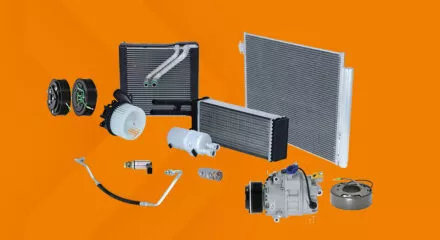
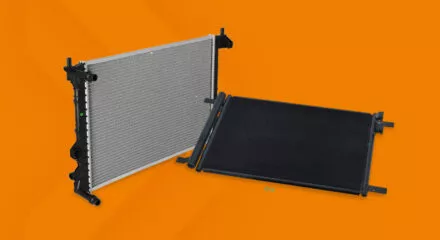
Cooling components such as radiators, intercoolers and oil coolers are a strong example. These are high-volume replacement categories where specialist aftermarket manufacturers have developed deep expertise over decades. AC components including condensers, compressors and evaporators follow the same pattern. Cooling fans, sensors, filters and other wear-and-tear replacement parts are also well-served by established aftermarket suppliers.
The reason is straightforward: these are large replacement markets where demand is high and continuous. Specialist suppliers who focus on these categories invest in product-specific R&D, targeted testing programs and manufacturing processes optimized for their specific product range. That focused investment often produces components that perform very well in daily workshop use. For more on what keeps these specific components reliable, see What Makes a Cooling or AC Part Reliable Over Time?.
There are specific situations where choosing original parts remains the more practical or appropriate option.
For brand-new vehicles that are still under manufacturer warranty, using original parts avoids any potential complications with warranty coverage. Highly integrated electronic components, particularly those that require software coding or calibration through the vehicle manufacturer’s diagnostic systems, may need original specifications to function correctly. Dealer-only niche components that are not widely available in the aftermarket leave no practical alternative. Software-coded systems where the vehicle’s control unit needs to recognize the replacement part are another scenario where the original channel may be necessary. And some repairs simply require the exact manufacturer channel preference, particularly in dealership environments.
The key point is that context matters more than ideology. The right choice depends on the specific vehicle, component and situation, not on a blanket preference for one channel over the other.
This is where much of the confusion around aftermarket reliability originates. When people say “aftermarket is unreliable,” they are often basing that judgment on experiences with low-end generic products rather than the professional aftermarket.
Unbranded, low-cost generic parts carry higher variability. They are primarily price-driven and may come from suppliers who invest less in engineering, testing and quality control. Fitment, material quality and longevity can vary significantly between batches.
Mid-market aftermarket parts offer a moderate balance between cost and quality. They can be a practical option for many applications, though they may not match the validation depth of premium suppliers.
Premium aftermarket parts come from manufacturers who invest heavily in testing, fitment validation and production consistency. These parts are engineered to meet or closely match original specifications and are backed by strong warranty terms and technical support.
Specialist brands that focus on specific product categories often develop the deepest expertise and the most reliable products within their area of specialization. Their focused investment in R&D, testing and materials for a defined product range gives them advantages that generalist suppliers cannot easily replicate.
When evaluating aftermarket reliability, the distinction between these tiers matters far more than the distinction between “original” and “aftermarket” as broad categories.
In daily practice, workshops judge reliability through tangible, experience-based criteria rather than brand labels.
Fitment success rate is often the first and most immediate quality signal. A part that fits correctly on the first attempt builds trust quickly. Low return rates over time indicate consistent quality across batches and applications. Repeat purchase confidence develops when a workshop has positive experiences with a supplier over multiple orders. Warranty claim frequency is closely monitored, as recurring claims erode trust. Installation speed matters because a part that fits well and comes with clear documentation saves labor. Availability is critical for keeping workshop throughput high. And supplier support, including access to technical assistance when installation questions arise, adds practical value beyond the product itself.
Daily workshop experience often matters more than branding. A supplier that consistently delivers parts that fit correctly, perform well and rarely come back builds stronger loyalty than any marketing message.
Several persistent myths continue to shape the original versus aftermarket debate. Correcting them helps buyers make more informed decisions.
The myth that original parts always last longer does not hold up universally. Many aftermarket parts deliver excellent service life, particularly from specialist manufacturers who invest in durability testing and quality materials. Longevity depends on engineering and manufacturing quality, not on the distribution channel.
The myth that aftermarket means poor quality confuses the broad category with its lowest tier. Quality varies enormously within the aftermarket, just as it can vary within the original parts channel. Evaluating the specific supplier is far more meaningful than judging the entire category.
The myth that the cheapest aftermarket option represents the best value overlooks the hidden costs of failure. Rework, warranty claims, lost labor time and customer dissatisfaction can quickly erase any savings at the point of purchase. For more on this topic, see The Hidden Cost of Cheap Automotive Parts.
The myth that only dealerships use reliable parts does not reflect current market reality. Independent workshops across the world rely on trusted aftermarket suppliers every day for the majority of their replacement work.
For buyers and workshop managers who want to select reliable aftermarket components, several practical criteria help distinguish dependable suppliers from risky ones.
Look for a known supplier reputation built over years of consistent market presence. Strong category specialization indicates deeper expertise and more targeted product development. Clear warranty terms demonstrate confidence in product quality. Technical catalog support with accurate cross-references and vehicle application data shows professionalism. Consistent fitment feedback from other workshops and distributors is a strong practical indicator. Distributor trust, meaning the distributors you work with are confident recommending the brand, adds another layer of validation. And reasonable pricing that is competitive but not suspiciously low suggests the supplier is investing appropriately in quality rather than cutting corners.
For a comprehensive checklist, see How Do You Know if a Car Part Is Reliable?.
Are aftermarket parts as reliable as original parts? Many are. Some are not. The same is true across any product market.
The smartest comparison is not original versus aftermarket. It is low-quality versus high-quality, untested versus tested, and inconsistent versus dependable. That is where real reliability is decided.
For workshops and buyers, the practical approach is to evaluate each supplier on its own merits: their engineering, testing, production quality and track record. Choosing a professional aftermarket supplier with deep category expertise and strong quality systems can deliver reliability that matches or closely meets the standards set by original equipment.
Manufacturers like NRF, with decades of specialization in engine cooling and air conditioning, represent the professional end of the aftermarket where reliability is built into every stage of the product lifecycle, from engineering and testing through to quality management and TECHsupport.
Do aftermarket parts last as long as OEM parts?
Many reputable aftermarket parts can deliver comparable service life, particularly in categories such as cooling and AC components where specialist manufacturers invest heavily in durability testing and quality materials. Lifespan depends on engineering, materials and manufacturing quality rather than the distribution channel.
Why are some aftermarket parts cheaper?
Lower distribution costs, competitive market dynamics and different branding models often allow aftermarket manufacturers to offer competitive pricing without compromising on quality. The price difference frequently reflects the supply channel structure rather than a proportional difference in product quality.
Do mechanics trust aftermarket parts?
Yes. Many independent workshops depend on trusted aftermarket suppliers for their daily operations. Workshop trust is built through consistent fitment, low return rates and reliable performance over time, not through brand labels.
Should I always buy original parts?
Not always. The right choice depends on the vehicle age, component type, urgency of the repair and the quality of the available aftermarket alternative. For many common replacement categories, professional aftermarket parts offer a strong combination of quality, value and availability.
Looking for dependable aftermarket components trusted across the industry? Explore solutions from NRF.